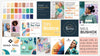
How to Design a Brand Mood Board Using Your Logo Colors & Style
A mood board is one of the most powerful tools you can use when building a brand. It transforms your ideas, emotions, and visual direction into a clear, cohesive identity. And the best starting point for your mood board? Your logo.
Your logo already contains the foundation of your brand’s personality — colors, shapes, typography, and tone. A mood board helps you expand that foundation into a complete visual direction you can use for your website, social media, packaging, and more.
This guide shows you exactly how to design a professional brand mood board using your logo’s colors and style.
1. Start With Your Logo as the Central Element
Place your logo at the top or center of your mood board.
It will guide:
-
Color palette
-
Typography
-
Photography style
-
Graphic elements
-
Textures
-
Brand personality
Your logo is your visual anchor.
2. Pull Your Logo’s Color Palette Into the Mood Board
Extract the HEX codes from your logo colors.
Include:
-
Primary brand color
-
Secondary accent color
-
Neutral tones
-
Optional highlight color
These colors should appear throughout your visuals to establish consistency.
3. Choose Typography That Matches Your Logo Style
Your mood board should include:
-
Heading font
-
Subheading font
-
Body text font
-
Optional signature or script font
Make sure the typography aligns with your logo’s energy — elegant, modern, bold, soft, or artistic.
4. Add Images That Match Your Brand Vibe
Include photos that represent your brand’s:
-
Emotion
-
Personality
-
Audience
-
Aesthetic
-
Tone
Examples:
-
Soft lifestyle images for feminine brands
-
Clean, minimal imagery for modern brands
-
Natural textures for organic brands
-
High contrast for bold or luxury brands
Your photos should FEEL like your logo.
5. Include Textures and Patterns Inspired by Your Logo
Textures create depth and mood.
Examples:
-
Linen or paper textures for handmade brands
-
Marble or metallic textures for luxury brands
-
Organic patterns for natural brands
-
Geometric lines for modern brands
These help clarify your visual identity.
6. Add Shapes or Design Elements From Your Logo
If your logo uses:
-
Circles → use round elements
-
Lines → use minimal line accents
-
Organic shapes → repeat the flowy forms
-
Geometric shapes → use structured grid-based elements
These create design consistency across everything you create.
7. Add Inspirational Keywords That Describe Your Brand
Include 3–6 words that define your identity:
Examples:
-
“Soft • Feminine • Calm • Elegant”
-
“Modern • Clean • Minimal • Bold”
-
“Natural • Warm • Handmade • Honest”
-
“Creative • Expressive • Playful • Artistic”
This helps keep your brand direction aligned.
8. Add Packaging or Mockup Examples
Show examples of:
-
Labels
-
Stickers
-
Business cards
-
Box inserts
-
Wrapping
-
Social templates
This helps visualize how your branding works in real life.
9. Keep Your Mood Board Clean and Organized
Avoid clutter.
Use clear sections for:
-
Colors
-
Typography
-
Photos
-
Icon style
-
Textures
-
Keywords
A clean layout will help you stay visually consistent when designing content.
10. Use Your Mood Board as Your Branding Guide
Your mood board becomes your reference for:
-
Social media posts
-
Website design
-
Packaging
-
Marketing graphics
-
Product photos
-
Email templates
Whenever you create new content, check your mood board to ensure everything aligns with your brand identity.
Final Thoughts
A brand mood board turns your logo into a full visual universe. By pulling in your logo’s colors, typography, shapes, and emotional tone, you create a clear direction for your entire brand. This makes every piece of content look polished, consistent, and professional.